REWILD-FIRE Research Project
Rewilding strategies, such as natural reforestation on marginal lands or renaturalization of forests where human action has been interrupted, provide opportunities to increase the amount of carbon stored by forest ecosystems. On the other hand, rewilding may also increase fire hazard and loss of Carbon through wildfire emissions.
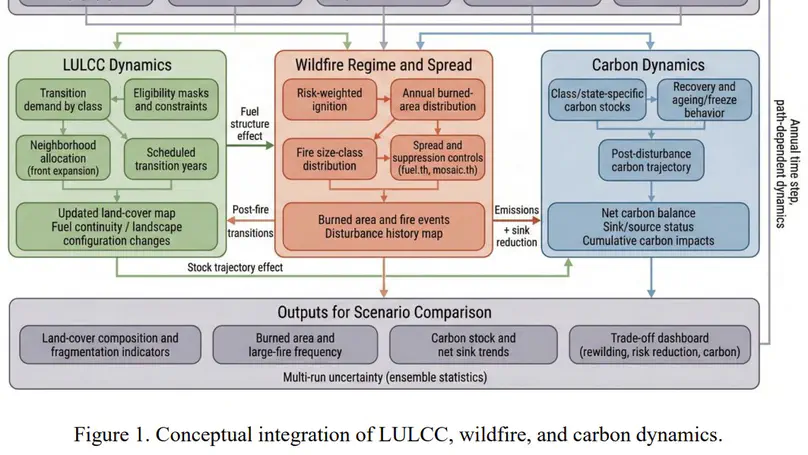
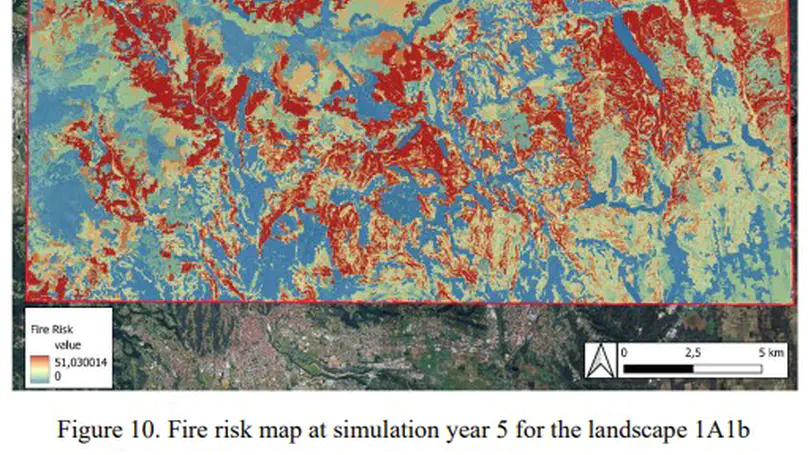
The REWILD-FIRE Research Project aims to assess trade-offs between increased biomass carbon and potential carbon losses from wildfire emissions and compare choices regarding the spatial planning of reforestation and proforestation throughout the Italian Alps. Combining field observations, remote sensing, and vegetation modelling with policy strategies scenarios, the project will inform policy makers of the contribution of forest nature-based solutions to achieve net zero emissions by 2050 in mountain regions. The project will also investigate the effect of alternative planning choices to rewilding and identify which ones can better support carbon dioxide removal.
Latest News
The REWILD-FIRE project dissemination ended with the final joint workshop “Rewilding in the Context of Increasing Disturbances” (11-12/03/2026 - online), organised together with the Horizon Europe projects wildE and WILDCARD . The workshop brought together researchers from the three initiatives around three complementary themes: harnessing disturbances to promote rewilding, understanding how rewilding influences disturbance regimes, and exploring the rewilding-wildfire nexus. In this context, REWILD-FIRE presented its work on rewilding policies for carbon sequestration under increasing fire risk and contributed to the discussion on integrating rewilding into wildfire risk management. The event served as an important platform for cross-project exchange and dissemination and helped identify shared priorities for future collaboration on governance, resilience, financing mechanisms and research needs for fire-smart rewilding pathways in Europe.
See the program here .
Deliverable 1.2 investigating the Rewilding potential and priority regions at EU scale is now available.